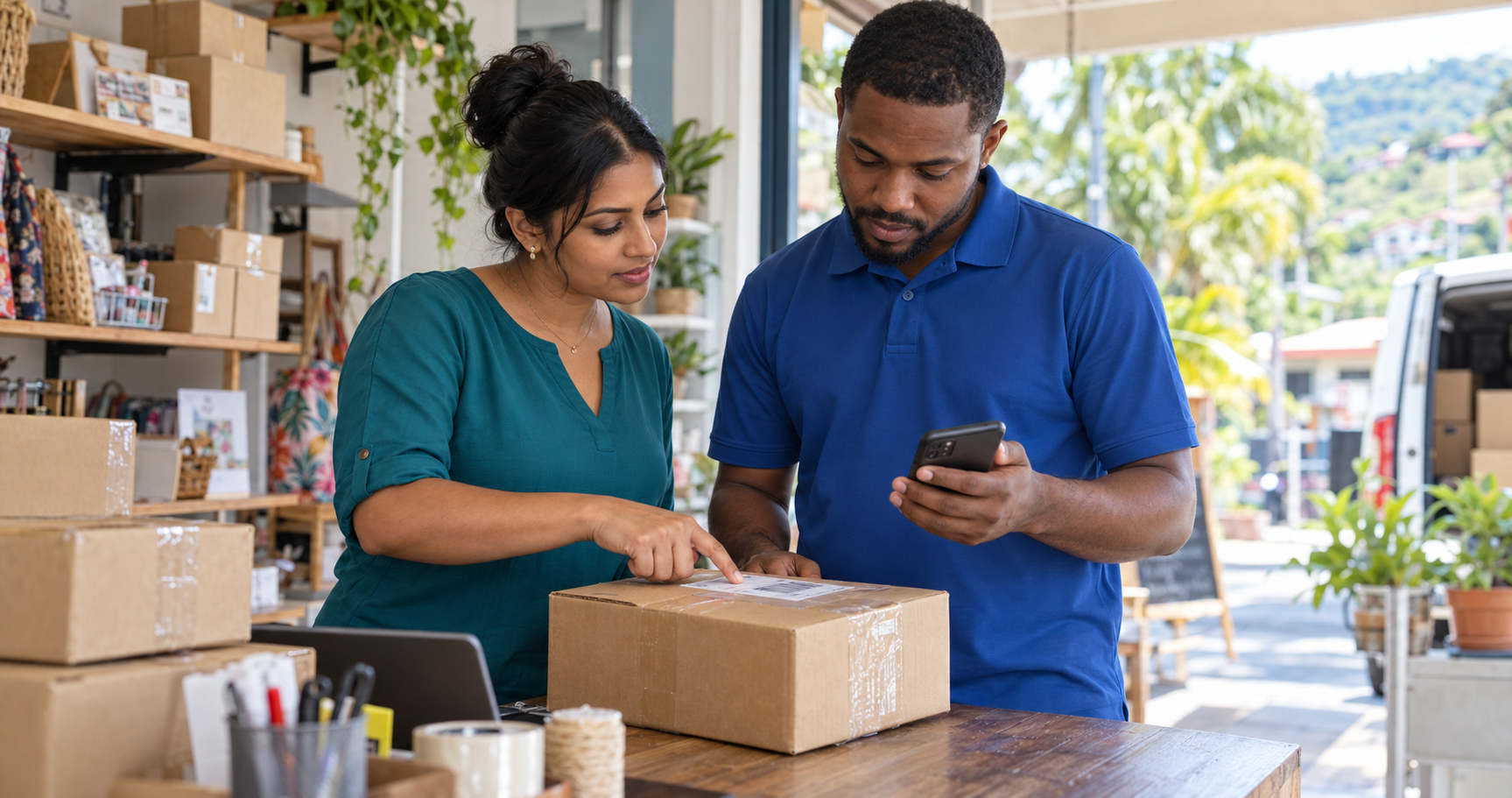
Safer Online Buying and Selling: A Trinidad & Tobago Guide
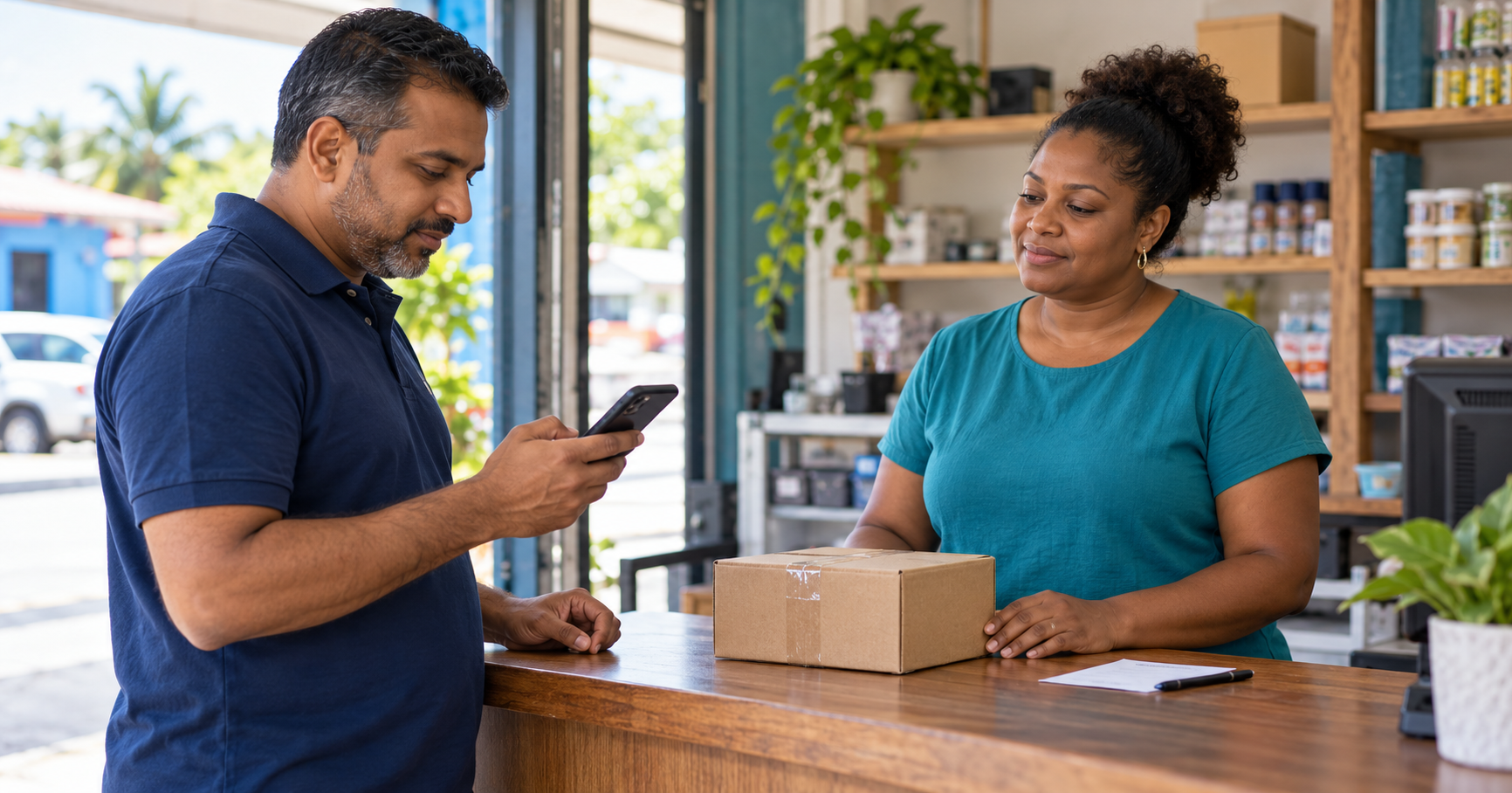
A good deal should leave room for checks
Buying and selling online can begin with a few messages and finish with a collection or delivery.
Before that handover, both people need to know what has been agreed, how payment will work and where the exchange will happen.
Take the time to check. Pressure to skip those steps is a reason to pause—not a reason to hurry.
Before buying: check the item and the seller
Read the description carefully. Ask about condition, size, quantity, defects and what is included. Request photographs of the actual item where appropriate.
Check the seller’s contact details and available history. A polished page, familiar logo or positive-looking profile should not replace your other checks.
Agree in writing on:
- The item and total price, including delivery.
- Any deposit and when the balance is due.
- Collection or delivery arrangements.
- Cancellation, return or refund terms.
For a local collection, arrange inspection or testing before payment where practical and agreed. For deposits or advance orders, verify the business and understand the terms before committing. FTC guidance for marketplace buyers.
Where a platform offers purchase protection, check which transactions qualify and use its approved payment process. Do not assume that a separate bank transfer carries the same protection.
Before releasing goods: verify payment yourself
A buyer says, “I paid already,” and sends a receipt.
Treat that as information to check. Open your banking or payment app yourself, or contact your provider through an established channel. Confirm the amount and payment status before releasing the goods.
Do not rely only on:
- A screenshot on the buyer’s phone.
- An email or message saying payment was received.
- A link the buyer sends you to “accept” the money.
If the payment is pending or unclear, ask your bank or provider how to confirm it. Do not assume that every payment method is irreversible. Police.uk guidance on confirming payment.
Be cautious about alleged overpayments, requests to refund a duplicate payment, or demands to pay a fee before receiving your money. Verify the situation independently before sending anything back. FTC guidance on payment scams targeting sellers.
Keep account access private
Never send your banking password, PIN, WhatsApp login code or other account-verification code to a buyer, seller or delivery driver.
Use strong, unique passwords and enable two-factor authentication on important accounts. Keep your phone and apps updated.
When an unexpected message asks for sensitive information, open the organisation’s official app or website yourself. Check the address carefully: HTTPS and a padlock indicate encryption, not proof that the business is genuine. TT-CSIRT’s cyber-safety guidance.
Plan a safer pickup
For an exchange with someone you do not know, prefer a busy, well-lit public location during daylight. Take someone with you where possible, and tell a trusted person where you are going.
Agree on the place and time before leaving. If someone suddenly redirects you to an unfamiliar or isolated location, pause and reassess rather than following automatically.
TTPS has specifically warned against questionable locations, particularly alone or at night. Read the TTPS advisory.
Keep inspection within the agreed area and avoid letting a stranger take an item out of sight to test it. If you feel uncomfortable, leave the transaction. A public location is a precaution, not a guarantee. Police advice on meeting buyers and sellers.
If bulky goods require home collection, have another adult present and limit access to the collection area. Avoid publishing your home address in the listing. Police guidance on home collections.
Make delivery arrangements clear
Before dispatch, agree on the recipient, contact number, destination, delivery charge and payment arrangement. Keep the order reference and courier booking or tracking details.
If another person will collect the order, agree on that arrangement beforehand. Verify unexpected collector or destination changes through the original customer contact.
For sellers or drivers making deliveries, confirm the destination before travelling. If the handover changes to an isolated location or you feel unsafe, stop somewhere safe and contact the customer or dispatcher to rearrange.
For recipients, arrange for yourself or an authorised person to receive the parcel. Use tracking where available and avoid leaving valuable deliveries unattended. Police.uk guidance on doorstep deliveries.
Unexpected “missed delivery,” “address correction” or additional-fee messages need checking. Contact the courier using details you independently know are genuine, rather than the link or number in the message. FTC guidance on fake delivery notifications.
Keep order and delivery records privately. Do not post customers’ addresses, identification documents or payment receipts publicly.
If something goes wrong
Put personal safety first. Leave an unsafe situation if you can. For a police emergency in Trinidad and Tobago, call 999. TTPS reporting information.
If you sent money or exposed banking details, contact your bank or payment provider immediately through its official channels. Ask what protective or recovery action is possible; recovery is not guaranteed.
Preserve the listing, messages, receipts, transaction references and delivery details. Report suspected fraud to the platform and police.
For a cyber-security incident, TT-CSIRT provides an incident-reporting channel. TT-CSIRT states that this is separate from the TTPS Cyber Crime and Social Media Unit. If account credentials were exposed, secure affected accounts through their official recovery processes. TT-CSIRT incident-response advice.
Using CariTap? The same checks apply
CariTap lets customers browse products and send selections to WhatsApp. The seller still confirms availability, the final total, payment and fulfilment. See CariTap’s ordering process.
A catalogue link does not replace checking the person, payment and handover arrangements.
Save this handover checklist
| Before… | Check… |
|---|---|
| Paying | The item, seller, total, terms and intended payment recipient |
| Travelling | The location, time, contact person and agreed arrangements |
| Handing over | The correct order, agreed recipient and confirmed payment status |
Save this checklist and share it with anyone who handles your purchases, collections or deliveries.